



Stay updated with industry perspectives, company news, operational insights, and textile market developments from Vorich Global Indonesia.

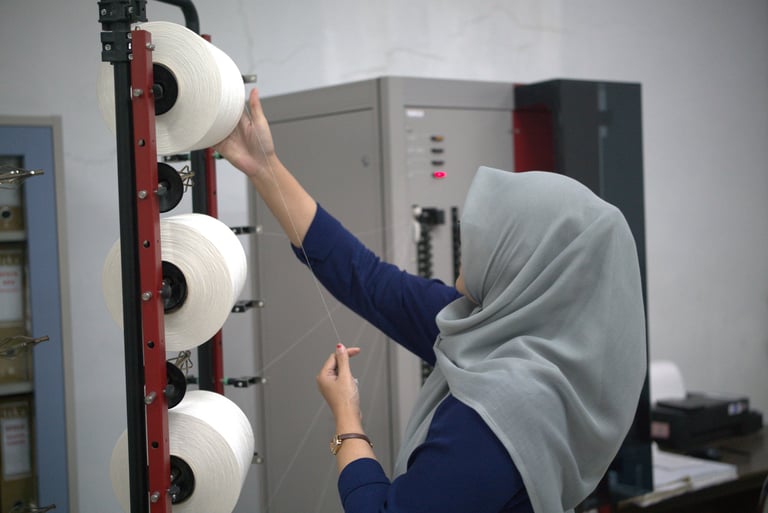
In textile production, what happens at the yarn stage doesn’t stay at the yarn stage. The quality of yarn directly shapes how fabric behaves, looks, and performs. If the yarn is inconsistent or flawed, those issues tend to show up later, often in more costly ways.
The Foundation of Fabric Quality
Yarn is the building block of fabric. Every weaving or knitting process depends on the strength, uniformity, and cleanliness of the yarn. When yarn quality is high, fabric production runs more smoothly. Machines operate with fewer interruptions, and defects are minimized.
On the other hand, poor yarn quality can lead to frequent breakages, uneven fabric surfaces, and production delays. Small inconsistencies at the yarn level can quickly multiply during fabric formation.
Strength and Durability
Yarn strength plays a major role in how a textile performs under stress. Weak yarns are more likely to break during weaving or knitting, causing inefficiencies and defects.
Beyond production, the impact continues. Fabrics made from stronger yarns tend to last longer, resist tearing, and maintain their structure after repeated use and washing. This is especially important for products like denim, workwear, and upholstery.
Evenness and Appearance
Yarn evenness affects how a fabric looks. Uneven yarn creates visible irregularities, such as streaks or thick and thin areas. In dyed fabrics, this can result in patchy or inconsistent coloration.
For brands that rely on visual quality, this becomes a serious issue. A fabric that looks inconsistent may be rejected, even if it performs well otherwise.
Hairiness and Surface Feel
Yarn hairiness refers to the small fibers that stick out from the yarn surface. High hairiness can cause problems like pilling, where small fiber balls form on the fabric over time.
It also affects how the fabric feels. Smoother yarns generally produce softer, cleaner fabrics, while hairy yarns can feel rough and look less refined.
Process Efficiency Downstream
Yarn quality doesn’t just affect the final product, it also impacts how efficiently downstream processes run.
High-quality yarn reduces machine stoppages, lowers waste, and improves overall productivity in weaving, knitting, dyeing, and finishing. Poor-quality yarn does the opposite, increasing downtime and operational costs.
For example, inconsistent yarn tension can disrupt knitting patterns, while contamination in yarn can create defects during dyeing.
Dyeing and Finishing Behavior
The way yarn absorbs dye is critical. Variations in yarn structure or composition can lead to uneven dye uptake. This results in visible defects that are difficult, and sometimes impossible, to correct later.
Consistent yarn ensures more predictable dyeing results, better color uniformity, and fewer rejected batches.
Yarn manufacturing is not just an early step in textile production, it sets the tone for everything that follows.
When yarn quality is carefully controlled, downstream processes become more stable, efficient, and predictable. The final fabric looks better, performs better, and meets customer expectations more reliably.
In short, investing in yarn quality is not optional. It is one of the most effective ways to improve overall textile performance.

In cotton yarn production, consistency is everything. The quality of the final yarn depends heavily on the raw material, and that raw material rarely comes from a single source. Cotton arrives in bales, often with varying properties such as fiber length, strength, and moisture. This is where a bale management system becomes essential.
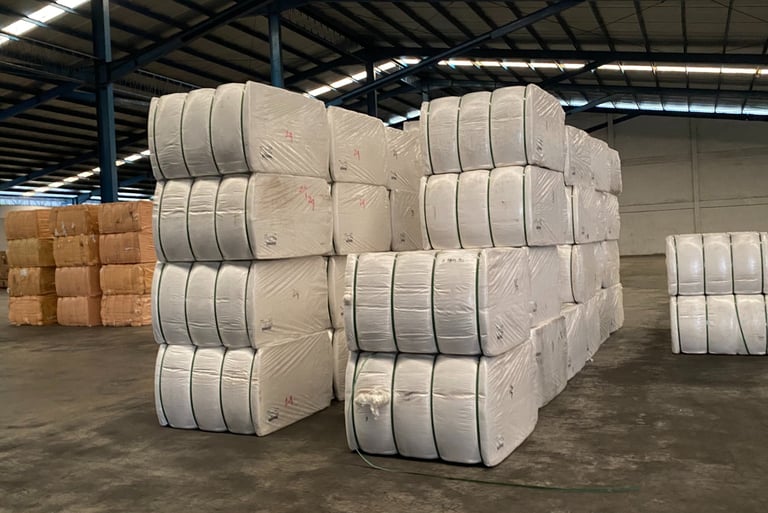
A bale management system is not just about tracking inventory. It’s about controlling variability at the very first stage of production.
Reducing Raw Material Variability
No two cotton bales are exactly the same. Without a structured system, mixing bales randomly can lead to uneven yarn quality. A bale management system allows manufacturers to group and blend cotton strategically. By doing this, they can balance fiber characteristics and create a more uniform input for the spinning process.
For example, if one bale has slightly shorter fibers and another has longer ones, a controlled mix helps stabilize the overall quality. This reduces surprises later in production.
Improving Yarn Consistency
Yarn buyers expect consistent strength, evenness, and appearance. If the input cotton fluctuates too much, the yarn will too.
With a bale management system, mills can plan blends based on tested bale properties. This leads to more predictable spinning performance and fewer defects. In practical terms, it means fewer yarn breaks, smoother operations, and better end products.
Enhancing Traceability
Modern textile production increasingly requires traceability. Customers want to know where materials come from and how they are processed.
A bale management system records the origin and characteristics of each bale used in production. If a quality issue arises, manufacturers can trace it back to specific batches. This makes problem-solving faster and more accurate.
Supporting Cost Efficiency
Raw cotton is one of the largest cost components in yarn production. Poor mixing decisions can lead to waste, rework, or downgraded products.
By using a bale management system, mills can optimize the use of available cotton. They can blend higher-grade and lower-grade bales in a controlled way, maintaining quality while managing costs. Over time, this leads to better resource utilization and improved margins.
Enabling Data-Driven Decisions
A good bale management system collects and organizes data over time. This data becomes valuable.
Manufacturers can analyze which blends perform best, which suppliers deliver consistent quality, and how different cotton characteristics affect production outcomes. Instead of relying on guesswork, decisions become based on actual performance.
In cotton yarn production, quality doesn’t start at spinning. It starts at bale selection.
A bale management system helps mills control variability, improve consistency, and make smarter decisions. It turns a complex, variable raw material into a manageable and predictable input. In a competitive industry where small differences matter, that control can make a significant impact.
Read our latest insights and discover how quality, technology, and market awareness shape our approach to modern textile manufacturing.
Email:
mrk@vorichglobalindonesia.co.id
HEAD OFFICE:
The East Tower - 39th Floor
Jl. Dr. Ide Anak Agung Gde Agung Kav E.3.2 No. 1,
Kuningan, Jakarta Selatan, DKI Jakarta-12950
FACTORY:
Jl. Solo-Tawangmangu KM 9.5 Sawahan
RT 005 RW 006 Jaten, Karanganyar
Indonesia - 57771
Phone:
+62 271 820 4000
Fax:
+62 271 820 0909